Why the Visual Inspection Is the Most Important Part of PAT Testing
When people think of PAT Testing, they often imagine a tester being plugged into an appliance and a sticker being applied.
In reality, the most important part of PAT Testing is the visual inspection and it’s where the majority of faults are found.
We recently carried out PAT Testing for a local business and, as is often the case, the issues we identified were not from the electrical test itself, but from what we could see by carefully inspecting the equipment.
What Is a Visual Inspection?
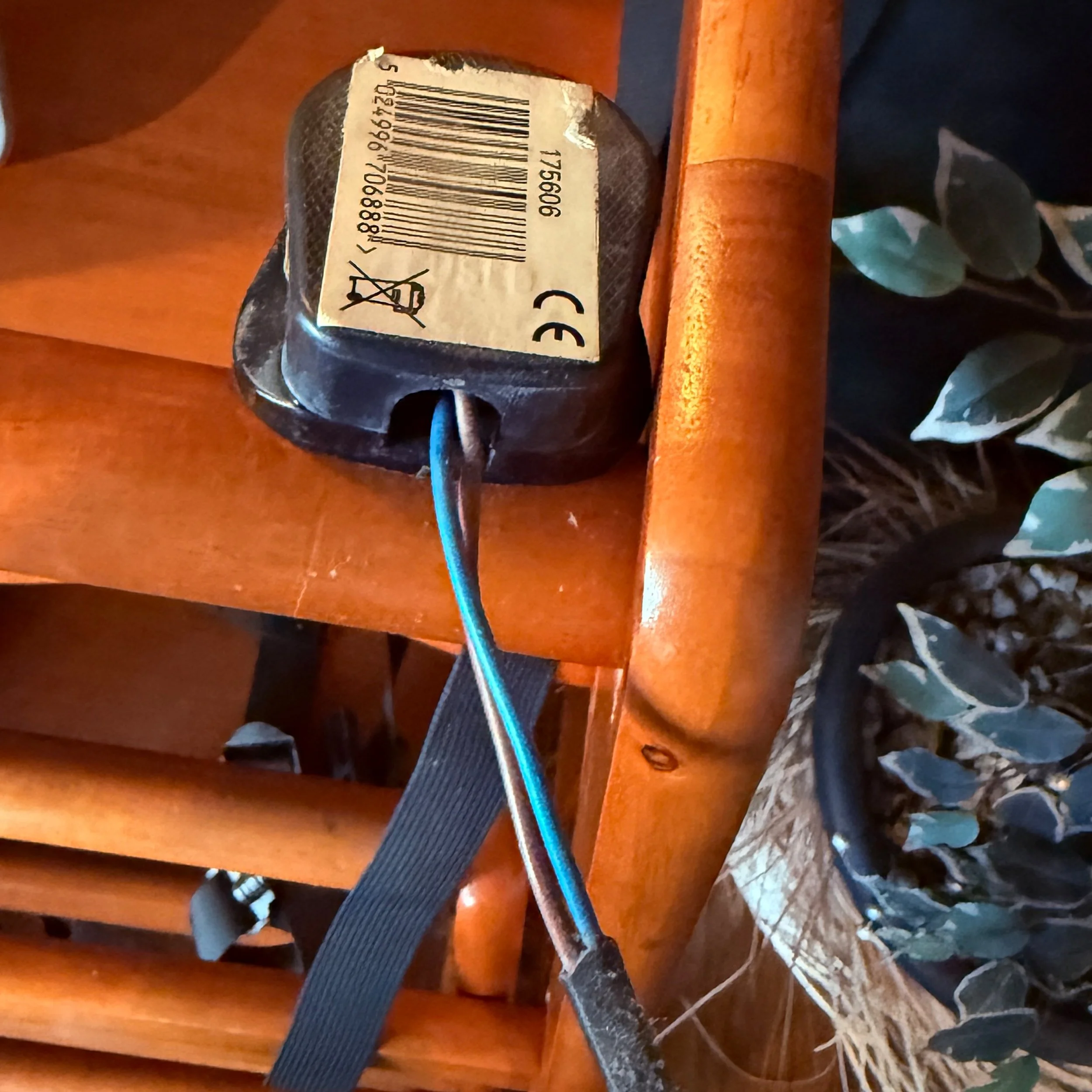
Incorrectly terminated plug with too much cable insulation visible, highlighting the importance of proper wiring and secure connections during PAT testing.
A visual inspection involves checking the appliance, cable, and plug for any signs of damage or incorrect setup.
This includes:
Damaged or frayed cables
Cracked plugs or casings
Signs of overheating or burn marks
Loose connections inside plug tops
Incorrect fuse ratings
These are all things that a machine alone cannot detect which is why experience and attention to detail are so important.
We Don’t Just “Sticker and Go”
We don’t believe in simply plugging an item in, getting a reading, and applying a sticker.
If a plug top can be opened, we will:
Check that all cable terminations are secure
Ensure screws are properly tightened
Confirm the correct fuse is fitted for the appliance
This extra step takes more time, but it’s essential for ensuring the appliance is genuinely safe.
Choosing the Correct Fuse (The 700W Rule)
One of the most common issues we find during PAT Testing is incorrect fuse ratings. As a general guide:
3A Fuse (Red)
Used for appliances up to approximately 700W–720W, such as:
Table lamps
TVs
13A Fuse (Brown)
Used for appliances over 700W, up to 3000W+, including:
Kettles
Toasters
Heaters
We typically stick to 3A and 13A fuses, only using 5A fuses for specific appliances where appropriate.
We Carry Out Minor Repairs Where Possible
Another key part of our approach is that we don’t look to fail items unnecessarily.
If an appliance can be made safe and brought up to standard, we will always aim to do so on site.
This includes:
Replacing incorrect or blown fuses
Rewiring plug tops
Re-terminating loose connections
Securing cables correctly
Recently, we came across a plug with poorly terminated wiring that would have resulted in a fail. By re-terminating the cable properly and ensuring all connections were secure, we were able to safely bring the appliance back up to standard and achieve a pass.
This approach helps:
Reduce unnecessary replacement costs
Keep your equipment in service
Ensure everything is genuinely safe and compliant
Of course, if an item cannot be safely repaired, it will be clearly failed and reported.
Why Quality PAT Testing Matters
You may see companies advertising PAT Testing at extremely low prices sometimes 50p per item or less.
While this might seem appealing, it often means:
Minimal visual inspection
Plug tops not being opened
Faster, less thorough testing
Important issues being missed
We’re not the cheapest service available and that’s because we take the time to carry out proper, thorough testing on every item.
For us, PAT Testing isn’t about how quickly we can apply stickers it’s about making sure your equipment is safe, compliant, and fit for use.
The Bottom Line
Most electrical faults are found before the tester is even plugged in.
A careful visual inspection can prevent:
Electrical failures
Fire risks
Equipment damage
If you’re looking for reliable, professional PAT Testing in Kent, we’re here to help — with a focus on safety, not shortcuts.
